If you have one day to understand Oaxaca, this route gives you the longest view: more than two thousand years of history in the morning and living workshops in the afternoon. Monte Albán, Cuilápam de Guerrero, San Antonio Arrazola and San Bartolo Coyotepec are all close to the city, so you spend your time visiting rather than driving.
How the day runs
Pickup is at your hotel in downtown Oaxaca, with departure at 9:00 AM and return around 6:00 PM. The route covers the archaeological site, the ex-convent, an optional buffet lunch and two craft villages. Round-trip transport, a tour guide and travel insurance are included.
Stop 1: Monte Albán
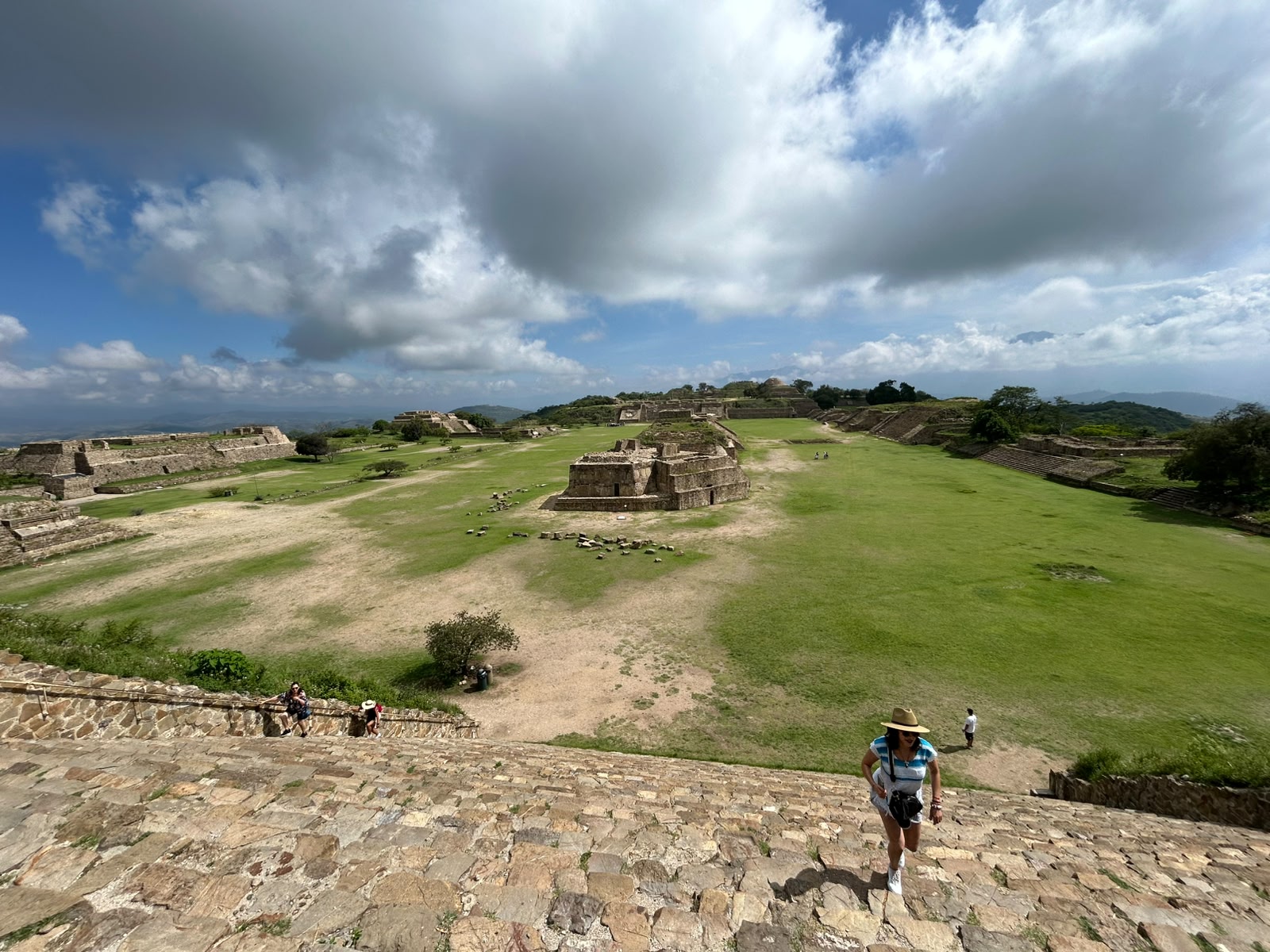
Founded around 500 BC on a leveled mountaintop above the valley, Monte Albán was the great capital of the Zapotec world and is part of a UNESCO World Heritage listing together with Oaxaca's historic center. Walk the Main Plaza, look for the ball court and the carved stones, and climb a platform to see how the three arms of the valley meet below you.
There is very little shade up here. Wear a hat, apply sunscreen before arriving and carry water. Some staircases are steep, with tall steps.
Stop 2: Cuilápam de Guerrero
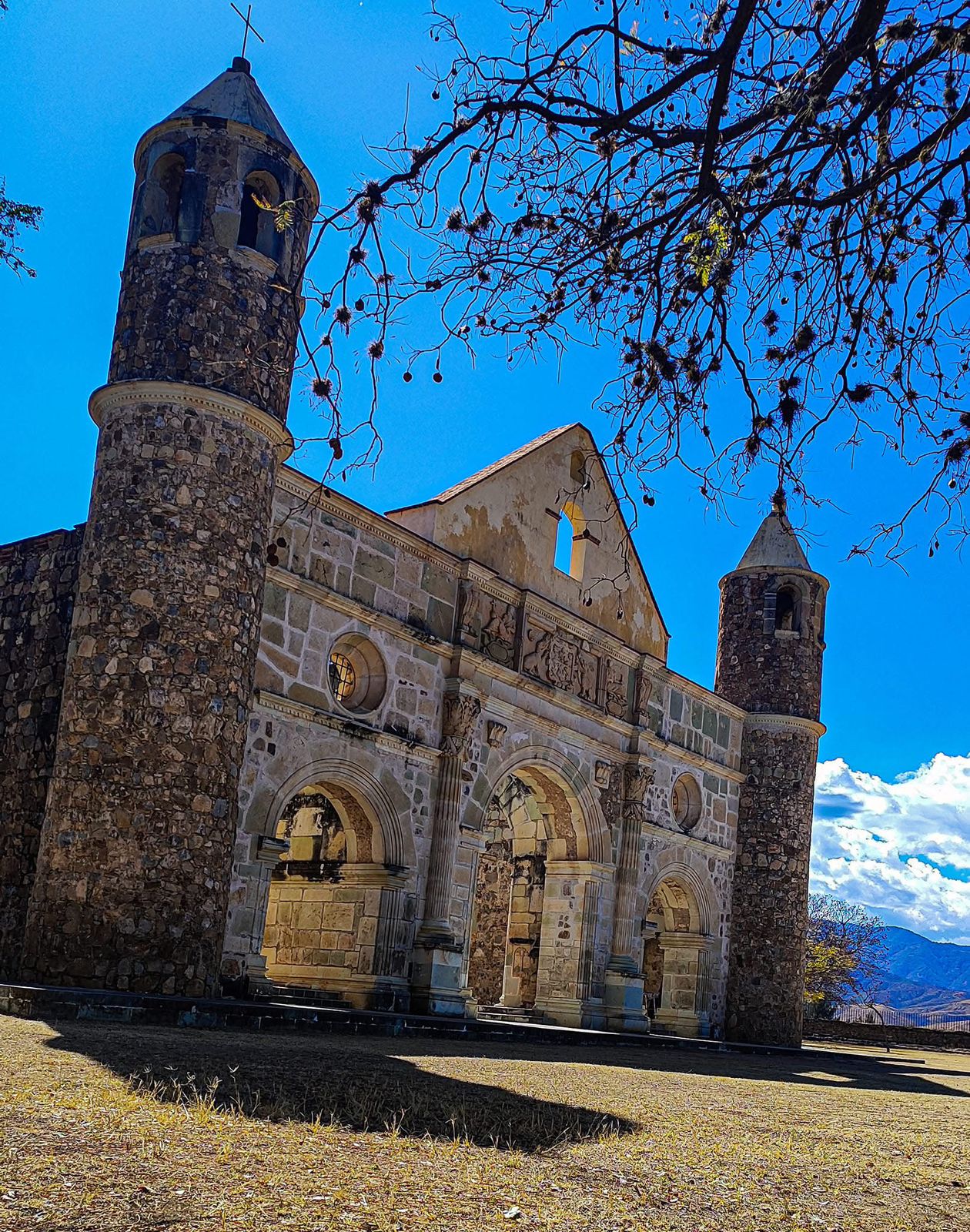
The Dominican complex at Cuilápam is memorable for its open, roofless basilica: long arcades, tall stone walls and the sky for a ceiling. It is also where Vicente Guerrero, hero of Mexican independence and later president, was executed in 1831, which explains the town's full name.
Stop 3: Arrazola and its alebrijes
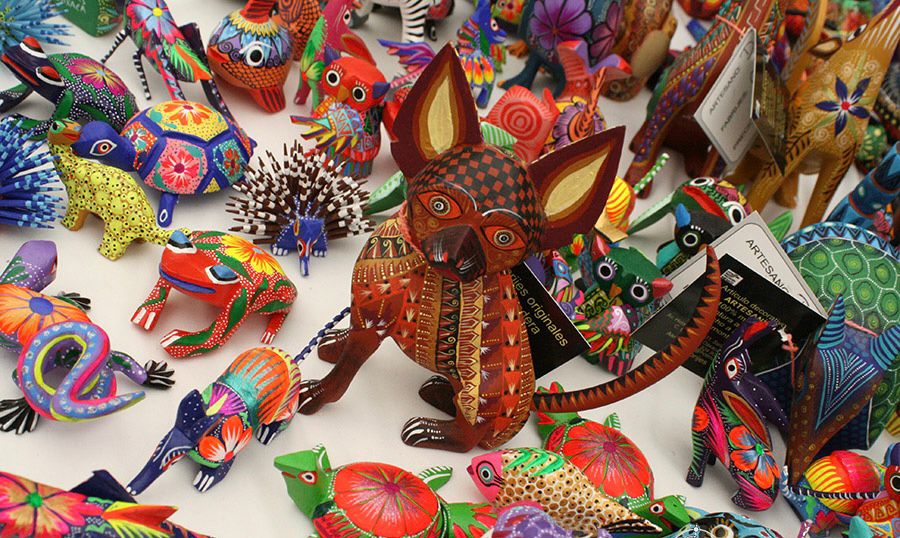
Arrazola is known for fantastical animals carved from copal wood and painted with extraordinary patience. The village's tradition of wood carving grew around artisan Manuel Jiménez. In a workshop you can follow the process: choosing the branch, carving the shape, sanding and then painting dot by dot and line by line. A small piece can take days.
Stop 4: San Bartolo Coyotepec
San Bartolo is the home of Oaxaca's black pottery. The color and the shine do not come from paint: the clay is burnished by hand and fired with limited oxygen. Doña Rosa Real made the glossy finish famous in the mid twentieth century. Note that the shiny pieces are decorative and are not meant to hold water.
What it costs on the day
- Monte Albán admission: 220 MXN per person, cash only.
- Optional buffet: 200 MXN per person, cash only.
- Crafts, drinks and tips: your own budget. Workshops are a good place to buy directly from the makers.
What to bring
- Walking shoes with grip.
- Hat, sunscreen, sunglasses and water.
- A light layer for the morning in the cooler months.
- Cash in small bills and a cloth bag for purchases.
Look for these details at Monte Albán
A big site is easier to enjoy when you have a few things to search for. Notice how the buildings frame the Main Plaza from north and south, and how sound carries across it. Find the carved figures often called the "Danzantes": despite the nickname, many researchers believe they show captives or the dead rather than dancers. Look at the unusual arrow-shaped building near the center, set at a different angle from its neighbors and often linked to astronomical observation. Then turn outward and take in the valley: choosing a summit with this view was a statement of power.
Making the most of the workshops
The craft stops are not a museum; you are visiting people at work. Watch a full demonstration before browsing, because it changes how you see the pieces on the shelves. Ask which part of the process is hardest, who in the family does each step and how long a favorite piece took. If you buy, ask for the maker's name. If you do not, a sincere thank you is enough.
How to prepare the night before
Withdraw cash for admission and lunch, set out shoes you have already worn in and fill a water bottle. Eat breakfast before 9:00 AM, since the day involves walking in the sun and lunch comes later. If you are arriving in Oaxaca that same week, this is a good first excursion: the sites are close to the city and the history you learn here helps you understand the markets, museums and villages you will see afterwards.
Frequently asked questions
Are tickets included?
No. Monte Albán admission is paid in cash on site, and rates may change.
Is it suitable for older travelers or children?
Generally yes at an easy pace. You do not need to climb the platforms to enjoy the plaza. If mobility is a concern, message us first.
Can I carry pottery home on a plane?
Yes, with good wrapping. Ask the workshop to pack it and keep it in your hand luggage when size allows.
Before you go
For deeper context, read our complete guide to Monte Albán and the story of Arrazola, village of the alebrijes. A few minutes of reading makes the visit far richer.